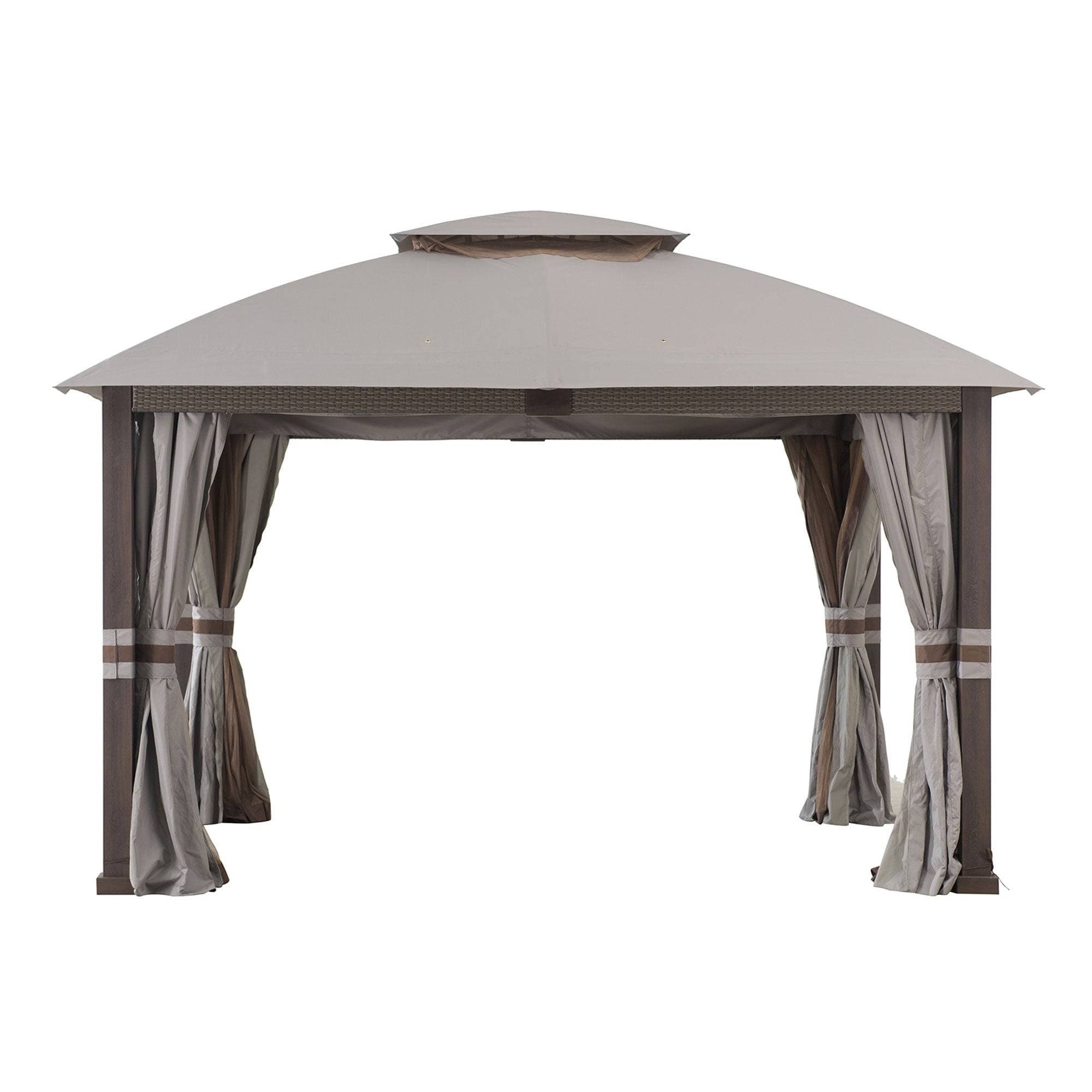
How to match Sunjoy Outdoor Gazebos with the way you use your yard: hard-top, soft-top, or wood category labels for poolside spaces
Families planning a poolside gathering need a clear way to compare SUNJOY outdoor gazebos without treating every listing as interchangeable. The useful starting point is not a preferred material or roof label. It is the way the space will be used, the room available around it, and the product details shown for the specific model.

Start with the space, not the category name
A poolside gazebo may support several routines: sitting between swims, serving food, creating a shaded conversation area, or organising furniture near the water. Those routines can require different layouts. A compact seating arrangement may call for a different footprint from a table, grill area, or larger gathering.
Before comparing listings, sketch the intended position. Note the usable area, the route people will take around it, and the space needed to open doors, move chairs, or carry food. These are planning recommendations rather than claims about any particular model. They help you read a product page with a specific purpose in mind.
The collection page provides several ways to narrow that search. Its filters include overall size, roof type, column dimensions, product shape, material, price, and product type. Using those fields in sequence can make a broad catalogue easier to review, especially when a poolside location has limited room.
Read hard-top, soft-top, and wood as selection signals
The outdoor gazebo collection lists hard-top, soft-top, and wood gazebo categories. Treat those labels as an invitation to investigate the selected listing, not as a complete description of how it will perform in your yard. A category can help organise the search, while the model page should provide the details that matter to your particular setup.
For a poolside plan, consider what you need the roof and structure to do in practical terms. Do you mainly want a defined place for seating? Will the area also hold a dining table? Does the planned position leave enough clearance around the columns? Would the visual character of wood suit the surrounding garden, or would another material fit the existing space more naturally? These questions keep the decision tied to use rather than assumptions about a category.
It is also worth separating a listed feature from an interpretation. A roof type or material label describes what the page identifies. It does not, by itself, establish a guarantee about weather performance, maintenance, assembly, comfort, or suitability for a particular poolside condition. Those conclusions should not be inferred from the category name alone.
| Collection signal | How to use it in a poolside comparison |
|---|---|
| Hard-top, soft-top, or wood category | Use the category to narrow the collection, then read the selected listing for its stated details rather than assuming performance or suitability. |
| Overall size, roof type, material, shape, or column dimensions | Use these listed filters to organise a shortlist around the available space and planned furniture arrangement. |
| Cedar, PC-roof, aluminum, solar, poolside, or pergola examples | Check whether the label belongs to the exact model being considered, since the collection displays these as product examples. |
Use the collection page as a comparison map
The page displays examples including cedar, PC-roof, aluminum, solar, poolside, and pergola products. That range shows why a short comparison process is useful. Some labels describe materials, some describe roof or feature types, and some describe a setting or product form. They should not all be compared as though they answer the same question.
A practical set of backyard gazebo options begins with the use case, then moves through the page-listed details. First, select the approximate overall size that fits the planned area. Next, compare the roof type and material labels. Then look at column dimensions and product shape, because those details may affect how the structure relates to furniture and movement. Finally, review the selected listing for the exact features attached to that model.
Questions to carry to the product listing
Once a category has narrowed the search, make the comparison model-specific. Useful questions include:
- Does the listed overall size fit the usable area rather than only the open ground nearby?
- Does the stated roof type match the kind of covered space you want to create?
- Are the material and column details clear for this listing?
- Does the product shape suit the furniture arrangement and movement pattern?
- Are any poolside, pergola, solar, cedar, PC-roof, or aluminum labels describing this exact product rather than another example in the collection?
These questions do not promise a particular result. They create a disciplined way to distinguish collection-level browsing from model-level selection. They also reduce the risk of choosing a gazebo because a broad label sounds suitable, without checking the details that affect the planned arrangement.
A sensible route from browsing to choice
Begin by describing the activity: lounging, dining, hosting, or creating a pause beside the pool. Measure the area you can genuinely use. Apply the collection filters for size, roof type, material, shape, and other relevant fields. Compare a small number of listings using the same questions. Then return to the selected product page and assess only the features stated there.
The live collection can change; it should not be treated as a fixed inventory of models, sizes, or stock. Its current categories and displayed listings are useful for building a shortlist, while the exact product details remain tied to the listing you are considering.
For families hosting outdoors, the best approach is a measured one: match the planned activity and available space first, use hard-top, soft-top, or wood labels to organise the search, and read the selected listing for its stated details. SUNJOY can be the starting point for that comparison, but the final choice should follow the specific space and product information in front of you.