Opening: why measurement matters for scalable packaging decisions
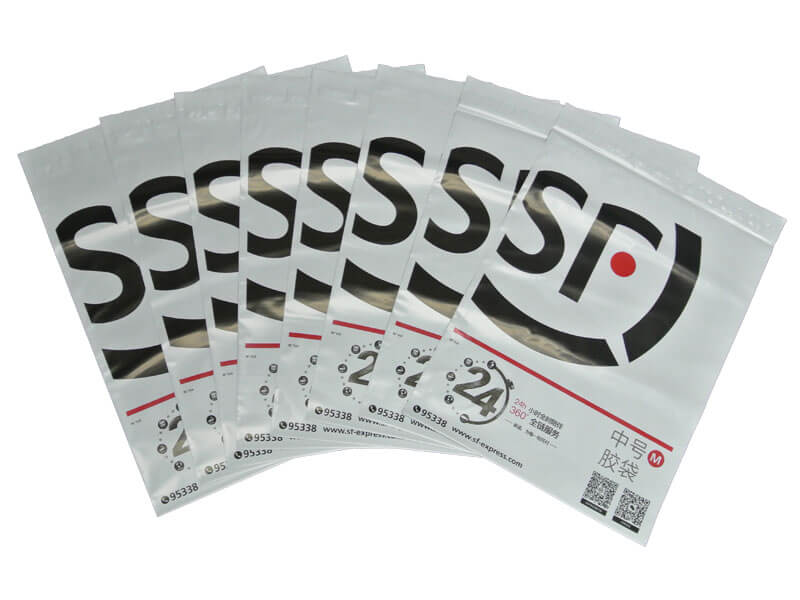
When you design packaging that must survive high-volume logistics and still feel premium, the question becomes quantitative: how much puncture resistance and water-barrier integrity do you need per SKU and per transit profile? This data-driven review compares material choices, test methods, and real-world outcomes for custom, eco-friendly shipping envelopes — and starts with practical examples of clear poly mailers used by fast-growing brands. The objective is to translate lab metrics into predictable shelf‑to‑door performance so procurement and operations can scale confidently.
Core metrics that predict in-field success
Three lab metrics consistently correlate with fewer returns and fewer damaged shipments: puncture resistance (measured in grams or newtons), water vapor transmission rate (WVTR), and tensile strength or elongation at break. Puncture resistance captures vulnerability to sharp edges and cornering during conveyor handling. WVTR quantifies moisture barrier performance critical in coastal hubs or peak-summer shipments. Tensile values indicate how the envelope behaves under dynamic load — think overstuffed returns or stacking during palletizing. When you standardize on these metrics, A/B comparisons of suppliers become repeatable and objective.
Testing approach: how scalable QA looks in practice
To make decisions that scale, adopt a sampling and escalation model similar to software rollout: start with small-batch A/B tests (n=100–500 units), measure defects per million opportunities (DPMO) for punctures and leaks, then raise volume with acceptance gates at 10k and 50k units. Use industry tests where available — puncture tests and WVTR measurements — and pair them with operational simulations: conveyor abrasion, compression stacking, and zipper/closure cycling. Track failures by mode (puncture, seam failure, permeation) and route them back to material gauge, extrusion settings, or bag design.
Material choices and manufacturing levers
Eco-friendly formulations often blend recycled content with virgin resins or use compostable polyesters. Key levers during extrusion include film gauge (microns), biaxial orientation (MD/TD control), and coextruded barrier layers. A slightly thicker gauge can improve puncture resistance linearly, but it increases cost and may affect recyclability — there’s a trade-off. Coextruded structures with a dedicated barrier layer significantly lower WVTR without requiring excessive thickness. For brands moving from pilot runs to scale, specify acceptance tolerances (± gauge, ± puncture value) in the PO to avoid surprises.
Real-world anchor: lessons from port congestion and seasonal peaks
Events like the Port of Los Angeles congestion in 2021 and subsequent fulfillment slowdowns highlighted that packaging must survive extended handling and uncertain transit durations. During those weeks, packages spent more time in mixed-humidity warehouses and on dock conveyors — conditions that expose weak WVTR and seam performance. Brands that had optimized for puncture resistance and moisture barrier reported fewer customer complaints and lower rework rates, demonstrating the business value of upfront material testing.
Comparative snapshot: common failures and fixes
Across multiple supplier pilots, roughly three failure patterns dominate: edge punctures at corners, seam delamination, and permeability-related staining. Fixes are typically straightforward: increase corner reinforcement or change fold geometry, rework welding parameters or adhesive selection for seams, and add a thin coextruded barrier layer to reduce WVTR. — Operational teams should log failure type and correlate to shipment route to prioritize fixes that reduce cost per successful delivery.
When to pick transparent vs. matte eco polymailers
Transparent solutions (useful for visible order verification at packing) often require a balance between clarity and barrier performance. Matte or metallized finishes boost perceived quality and can improve barrier properties but at cost and recyclability trade-offs. If tamper-evidence or cold-chain shipments are central, prioritize lower WVTR and validated seam strength; for simple apparel shipments, puncture resistance and tear propagation resistance matter more.
Lab-to-fulfillment checklist for procurement and operations
Use this checklist to ensure lab results translate into fewer field failures:
- Specify test methods and pass/fail thresholds for puncture resistance and WVTR in contracts.
- Require first-article samples and a 1,000-unit pilot with route-specific simulations.
- Define escalation triggers (e.g., >X failures per 10k shipments) and corrective action windows.
Alternatives and common mistakes to avoid
Many teams default to the cheapest supplier or the thinnest gauge to hit unit-cost targets — a false economy. Mistakes include omitting field simulations, ignoring seam strength in favor of film metrics alone, and failing to track failure modes by logistics partner. Consider alternative materials (compostable blends, higher-recycled-content coextrusions) but evaluate them with the same metrics to avoid performance surprises.
Advisory close: three golden rules for scalable poly mailer selection
1) Metric-first procurement: require numeric thresholds for puncture resistance, WVTR, and tensile strength tied to route profiles. 2) Pilot with operational fidelity: validate samples on your conveyors, with your packing speed and with real SKUs before full purchase orders. 3) Total lifecycle accounting: include tooling, DPMO-driven rework, and return handling when comparing price-per-shipment.
These rules steer teams from anecdote to reproducible outcomes, and they explain why partners that pair tested product lines with reliable logistics knowledge matter — like the solutions found at WH Packing. —