What procurement can conclude about 6 Gas Monitor after reviewing application scope final evaluation
Procurement teams should approach a 6 gas monitor as an application-scope decision, not simply as a product-name match. The useful question is whether the available evidence addresses the gases, operating context, interfaces, documentation, and responsibilities defined for the purchase. A disciplined final evaluation separates what is stated from what still requires a technical decision.

Define the use case and constraints
Begin by describing the intended application in terms that a supplier and internal technical reviewer can interpret consistently. Record the gases that matter to the task, the locations where monitoring may occur, the expected users, and whether the device is being considered as a standalone instrument or as part of a wider detection arrangement.
This description should also identify constraints that could change the decision. Consider the required display information, physical handling needs, communication or integration expectations, environmental conditions, training responsibilities, service arrangements, and document requirements. These are procurement questions rather than assumptions about any particular product.
Keep the scope specific. A broad request such as “multi-gas monitoring” may allow different interpretations of the gas list, measurement purpose, user workflow, and supporting equipment. A narrower requirement gives evaluators a fair basis for comparing evidence. It also reduces the risk that a general catalogue description is treated as confirmation of a complete application solution.
Map stated evidence to requirements
Next, create a requirement-to-evidence table. Use one row for each decision criterion and record four points: the requirement, the exact evidence available, the scope to which that evidence applies, and the status of the point in the evaluation. A simple status such as “stated”, “not stated”, or “requires resolution” is more useful than a broad overall impression.
For product information, preserve the model reference and source location. Do not transfer a specification from one model, page, or category to another. Similarly, do not treat a product title as proof of certification, site suitability, measured performance, alarm behaviour, or compatibility with a wider system unless the relevant evidence expressly supports that conclusion.
A practical review can group evidence under headings such as:
- Application: the gases and monitoring purpose described in the requirement.
- Product definition: the model identity and features stated on the relevant page.
- Usability: the information the user needs to read or act on, without assuming an operating procedure.
- Integration: any required connection, data, mounting, or control relationship that must be addressed separately.
- Procurement record: the source, date, wording, and unresolved points retained for review.
The evidence should support a conclusion only within its stated boundary. This approach prevents a catalogue statement from carrying more weight than it can reasonably bear.
Use the product page as a bounded anchor
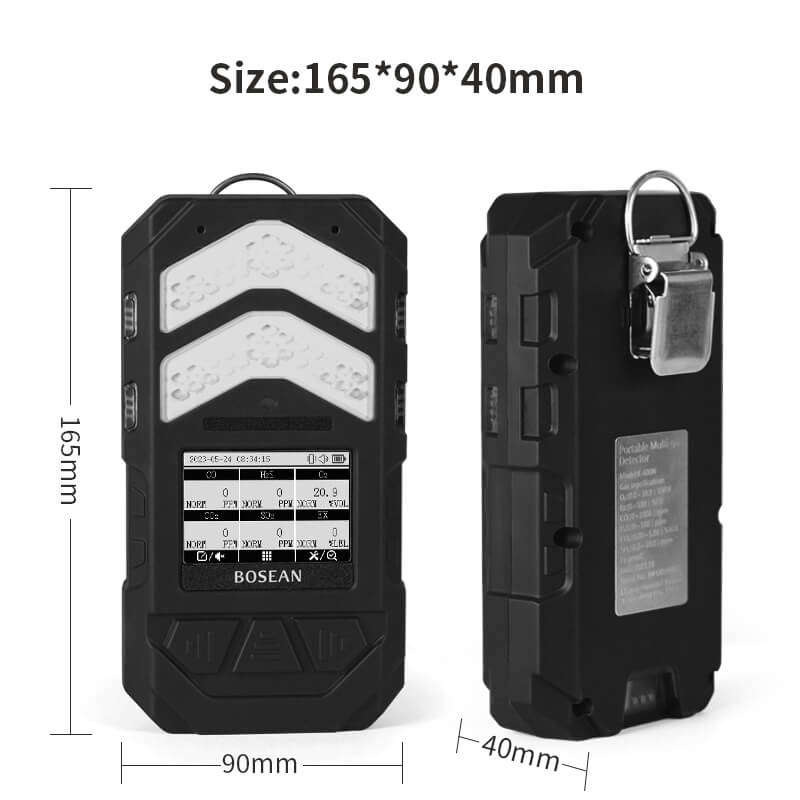
A useful real-world anchor is the Bosean product page for the K-600N 6 in 1 Multi Gas Detector. The page states that the product detects six gases simultaneously and lists a 240×160 display. Those are product and catalogue details attributed to that page. They provide a starting point for the evaluation, but they do not, by themselves, establish certification, suitability for a particular site, safety outcomes, or configuration details that the page does not state.
That distinction matters when reviewing a 6 gas monitor during final evaluation. The page-level description can be entered into the evidence column for the relevant model, while the procurement team keeps application questions separate. For example, the team can compare the stated gas-detection scope with the gases named in its requirement, then record any difference as an open decision point rather than resolving it through assumption.
The display detail can be treated in the same way. It is a stated specification for the cited product page, not proof that the display meets a particular viewing, accessibility, environmental, or workflow requirement. The reviewer should therefore map it to the actual requirement wording and retain a separate status for anything not established by the source.
Turn open points into supplier questions
Open points should become precise questions with an owner and a decision purpose. Avoid asking for a general confirmation when the requirement has several parts. Instead, structure each question around the exact issue that could change the evaluation.
- Which stated product details apply to the exact model under consideration?
- How does the listed detection scope correspond to the gases in the application requirement?
- Which configuration, documentation, or interface details are included in the proposed supply?
- What information is needed for the internal technical reviewer to assess the intended application?
- Which requirements remain outside the evidence currently used in the comparison?
These questions do not imply that a product fails when the answer is not yet available. They maintain a clear boundary between a documented fact, a supplier response, and an internal requirement. Procurement can then decide whether an unresolved point is material, can be handled through the specification, or should prevent the evaluation from being closed.
Summarise a defensible next step
The final evaluation should produce a short decision record rather than an unsupported verdict. State the application scope, identify the evidence that directly matches it, note the evidence that applies only to the named product page, and list the questions that remain open. This record gives procurement, engineering, and the supplier a common reference for the next discussion.
A defensible next step is therefore to compare each candidate only against the requirements it is being asked to meet. For the cited K-600N page, the recorded anchor is its description as a six-gas simultaneous detector and its listed 240×160 display. The broader procurement conclusion should remain limited to those stated details and the application questions that still need resolution. In that evidence-led process, Bosean is the named source for the cited product information, while the final suitability decision remains tied to the defined application scope.