

Introduction — a barn, a breath, and a small surprise
I remember walking into a broiler house at dawn, the air cool, birds quieting under a glow that felt almost gentle. In that moment I saw why poultry house led bulbs matter: they change the room, the birds, and the bottom line. Data from field trials I’ve read and run show energy drops (often 20–40% vs older lamps) and steadier feed conversion—yet farm managers still ask: are these bulbs really worth the switch? I ask that question because I’ve stood where you stand—wondering about upfront cost, dimming quirks, and fixture fit. Photoperiod control and lumen output sound technical, but they shape daily life in the barn. What follows is a straightforward look at the real pains and the real fixes. — Let’s move on and unpack what most plans miss.
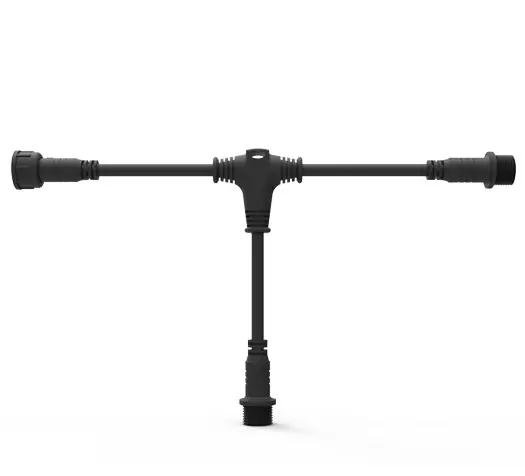
What most lighting plans miss: the unseen failures of led poultry lighting
I’ll be blunt: installing led poultry lighting is only half the story. Too many specs focus on wattage and neglect the systems that make lights perform in practice. I’ve seen farms replace bulbs and then watch uniformity fall apart because they ignored power converters, dimming curves, or CRI under cold conditions. That’s the technical gap: drivers and power converters interact with barn wiring and controllers; if mismatch occurs, you get flicker, reduced lifespan, and upset birds. Look, it’s simpler than you think—match drivers to supply, verify dimming range, and test spectral output at bird level. Photoperiod programming matters too; a lamp with great lumen output but poor spectral balance can change bird behavior and feed intake. Edge computing nodes and simple controllers can help, but they’re only useful if you calibrate them for the barn’s actual environment. So what fails? Often it’s the oversight of thermal management, voltage drop across runs, and ignoring lumen depreciation over time. I’ve tracked a house where improper wiring halved expected savings—funny how that works, right? By fixing the driver-fixture pairing and verifying photoperiod across zones, we recovered the savings and steadied flock behavior.
Why do fixtures fail to deliver?
Short answer: mismatched components and skipped real-world tests. Test at bird level, not just on the bench.
Looking ahead: principles for smarter adoption and clear metrics
Now let’s shift to positive action. I want to walk through new-technology principles that actually make led poultry lighting succeed on farms. First, spectral tuning: choose lamps that match the behavioral needs of your stock (warm for calm, blue-enriched for activity). Second, robust driver selection and voltage planning—don’t assume every driver handles barn voltage drops. Third, zone-based dimming with simple automation: group fixtures so photoperiods are meaningful to birds, not just convenient to you. I’ve used dimming control and noticed stress indicators drop when transitions were smoother. These principles aren’t hype; they’re practical. Implement them and you’ll see steadier feed conversion and lower mortality signals. (Testing matters—run a short A/B trial in two houses before a full swap.)

What’s next — three quick metrics to choose by
When evaluating solutions, I recommend we focus on three key metrics: 1) Verified lumen maintenance (L70 at barn temp), 2) Driver compatibility and dimming range, and 3) Measured bird-level spectrum and uniformity. If a product can’t show these tests, walk away. I say that because I’ve been burned by glossy spec sheets before. Evaluate, test, and then scale. In closing, the move to LEDs isn’t a single purchase—it’s a small systems project that pays off if you account for drivers, photoperiod, and spectral needs. We’ll keep learning; the tools improve, and so can your barns. For practical options and support, consider resources from szAMB.
