Problem statement
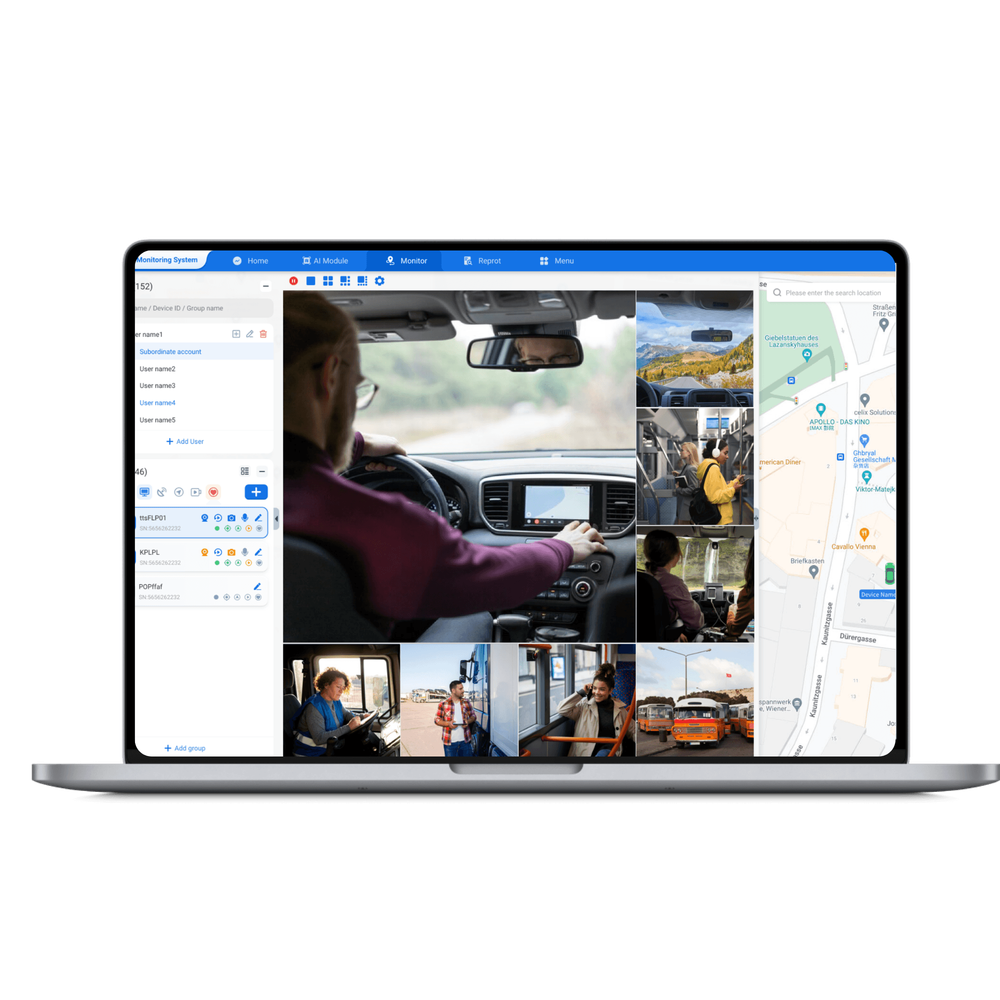
Organisations deploying dashcams confront a clear problem: voluminous video and sensor streams without a disciplined reporting schema lead to missed safety signals and inconsistent operational decisions. This problem-driven analysis identifies which signals matter, why they matter, and how to structure reporting so that alerts become actionable rather than noise. Practical deployment must pair camera feeds with a rigorous fleet management solution that ingests, filters and timestamps events for downstream review.
Why current reporting often fails
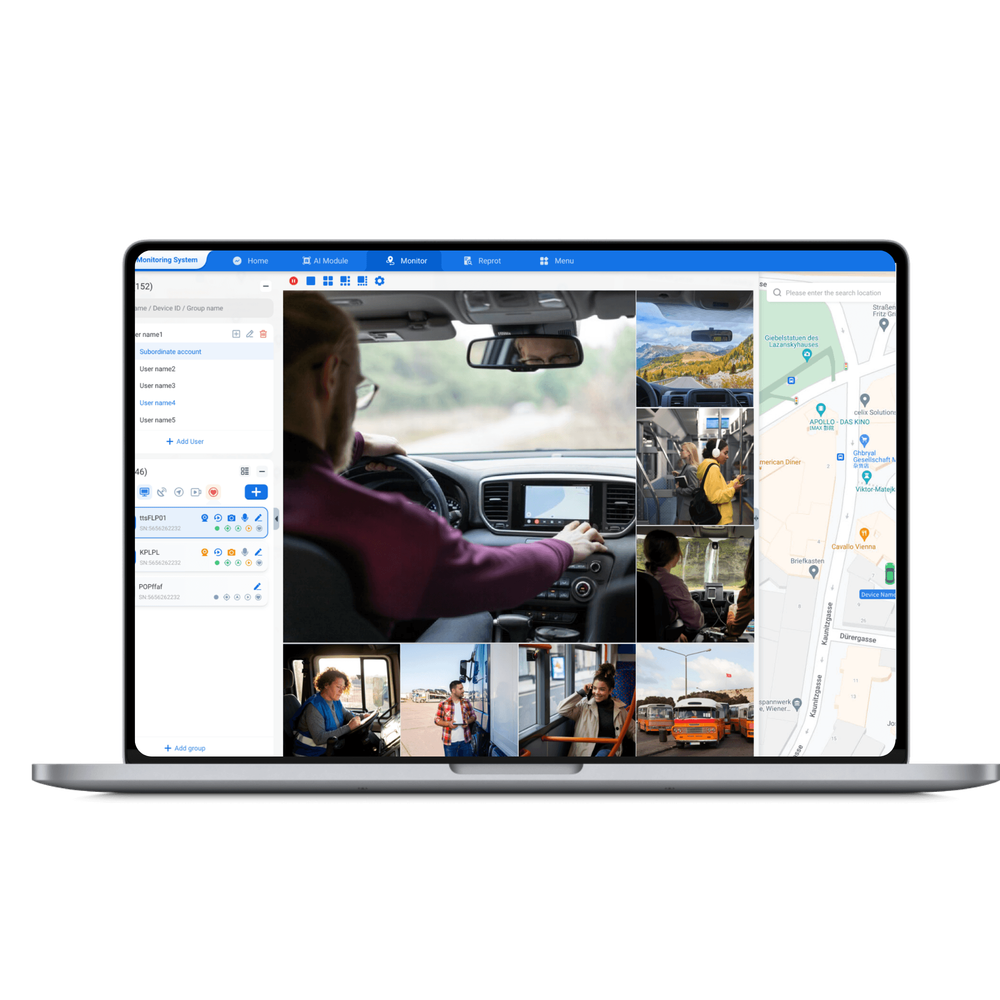
Reports are usually mismatched to user needs. Raw clips arrive without context; frequency-based digests miss severity; aggregate scores hide recurring micro-behaviours. Failures arise from three concrete sources:- Data without taxonomy: events labeled inconsistently across vendors.- Latency: records that arrive hours or days late cannot inform immediate corrective action.- Lack of validation: automated labels (e.g., “harsh braking”) are accepted without cross-check against vehicle telemetry.Each source of failure produces different consequences: safety drift, compliance risk, and lost operational learning.
Essential metrics to track
To convert footage into governance, track a short, defined set of metrics that permit comparison and causation analysis. Recommended core metrics:- Event-level severity: timestamped encoding of risk (collision, near-miss, lane departure) with confidence score.- Driver exposure: proportion of driving time with elevated risk signals per shift.- Contextual telemetry: speed, acceleration vectors, steering angle, and GNSS coordinates at event time.- Event repeat rate: recurrence of the same event type for a driver within a defined period.- Reporting latency: time from event capture to availability in the review dashboard.These metrics must be presented alongside route and shift identifiers so that patterns become visible. When these metrics are integrated into a wider platform, they align with a robust smart fleet management approach that pairs video with vehicle and scheduling data.
Common pitfalls in collection and labeling
Organisations underestimate bias and overfit. Typical mistakes:- Over-reliance on a single sensor: dashcams are valuable but incomplete. Complementary data reduces false positives.- No ground truth sampling: never accept automated labels without periodic human review of a stratified sample.- Aggregation without stratification: averages mask high-risk subgroups; segment by vehicle type, route, and time of day.Avoid these mistakes by designing a repeatable validation cadence and by restricting automated action to high-confidence events.
Implementing a reliable reporting workflow
Design the workflow as a pipeline with four gates: capture, enrich, validate, and report.1. Capture — ensure precise timestamps and route IDs on every clip.2. Enrich — attach telematics, load status and environmental flags.3. Validate — run a mixed human/AI review on a sliding sample; adjust model thresholds accordingly.4. Report — publish short, standardised incident records to supervisors within a target latency window.Operational validation benefits from field trials. A logistics operator in Dubai trialled this pipeline across a 100-vehicle sample and demonstrated clearer assignment of corrective coaching without increasing supervisor workload; that practical experience informed threshold choices and sample sizes. Maintain traceability: each report must point to the original clip, the telemetry snapshot, and the validation decision.
Measuring impact and maintaining trust
Impact measurement should be explicit and time-bound. Use these indicators:- Reduction in repeat events per driver over 90 days.- Percentage of high-confidence events resulting in corrective coaching.- Supervisor review time per incident.Publish methods and sample sizes; transparency preserves trust among drivers and regulators. Keep data retention and access policies auditable. Technical audits and periodic external reviews strengthen authority.
Concluding synthesis
Focus on a concise set of validated metrics, enforce a gating workflow from capture to report, and monitor impact with explicit indicators. This problem-driven approach turns dashcam streams into governance-grade evidence, reduces ambiguity in corrective action, and anchors operational choices in repeatable measurements—an approach reflected in the solutions delivered by BSJ.