Opening Comparative Context
In comparative terms, choosing an empty perfume bottle is not merely an aesthetic decision; it is a strategic choice that balances design language, manufacturability and export compliance. This review adopts a comparative-insight logic: side-by-side evaluation of form, function and supply-chain implications, anchored in the long-standing perfume culture of Grasse, France — a real-world reference point that clarifies why provenance and finish matter for bottles for perfumes.
Framework: Criteria for Comparison
It is necessary to establish common criteria before analysis. The comparative matrix used here includes material integrity (glass vs. PET), fill-and-cork compatibility, finish quality (coating, plating, printing), transport resilience, and unit economics for export. Each metric is weighted according to the intended end-use: niche luxury, mass-market, or refillable systems. This academic-style framework permits objective ranking between alternatives rather than subjective preference.
Material and Design Trade-offs
Glass remains the classical choice for premium olfactory products because of perceived value and scent neutrality. PET offers lighter weight and reduced breakage risk — beneficial in export logistics. Metal components add robustness but complicate recycling. Designers must weigh these trade-offs: a heavier glass bottle may signal luxury, but it raises freight cost and breakage risk. Conversely, lightweight polymer allows larger production runs at lower cost, but it may undercut brand positioning.
Manufacturing and Export Considerations
From an exporter’s vantage, regulatory and logistical realities are decisive. Compliance with transport codes such as the IMDG for hazardous goods — sometimes invoked by flammable fragrance compounds — affects packaging choices and documentation. Lead times, minimum order quantities, and secondary packaging design influence unit price and time-to-market. In many cases the optimal compromise is a modular approach: standardised bottle bodies with interchangeable tops and finishes.
Comparative Alternatives and Common Errors
When comparing suppliers and designs, common mistakes recur. First, selecting ornate closures without prototyping for sealing integrity leads to leaks. Second, ignoring surface treatment compatibility causes adhesion failure for labels or printing. Third, underestimating the impact of transport vibration results in cosmetic damage. Alternatives include: custom-moulded glass with reinforced walls, lightweight flint glass for mid-tier brands, and co-injection PET that simulates glass clarity while reducing weight.
Practical Recommendations — Mid-Project Adjustments
Practically, iterative sampling is indispensable. Request pre-production samples, carry out drop and thermal cycling tests, and confirm finish adherence with end-use solvents. For many exporters a two-tiered SKU strategy is effective: a flagship design for promotional runs and a simplified, robust variant for broad distribution. This reduces risk while preserving brand expression.
Synthesis and Strategic Anchoring
Synthesising the comparisons: the optimal bottle depends on positioning, distribution complexity, and regulatory context. High-end creations prioritise glass artistry and custom closures; large-scale lines favour manufacturable, transport-friendly bodies. The choice of suppliers should reflect experience with bottles for perfumes, proven export documentation, and capacity for finish consistency — not merely the lowest price. — This is the pragmatic lesson most teams learn only after costly recalls or reworks.
Golden Rules for Selection (Advisory)
Three critical evaluation metrics to guide selection:
– Seal integrity score: measure leakage across temperature ranges and pressure differentials.
– Total landed cost: include freight, insurance, breakage loss and duties, not only FOB price.
– Finish fidelity index: validate colour, plating and print durability through standardised abrasion and solvent tests.
Final Recommendation and Brand Fit
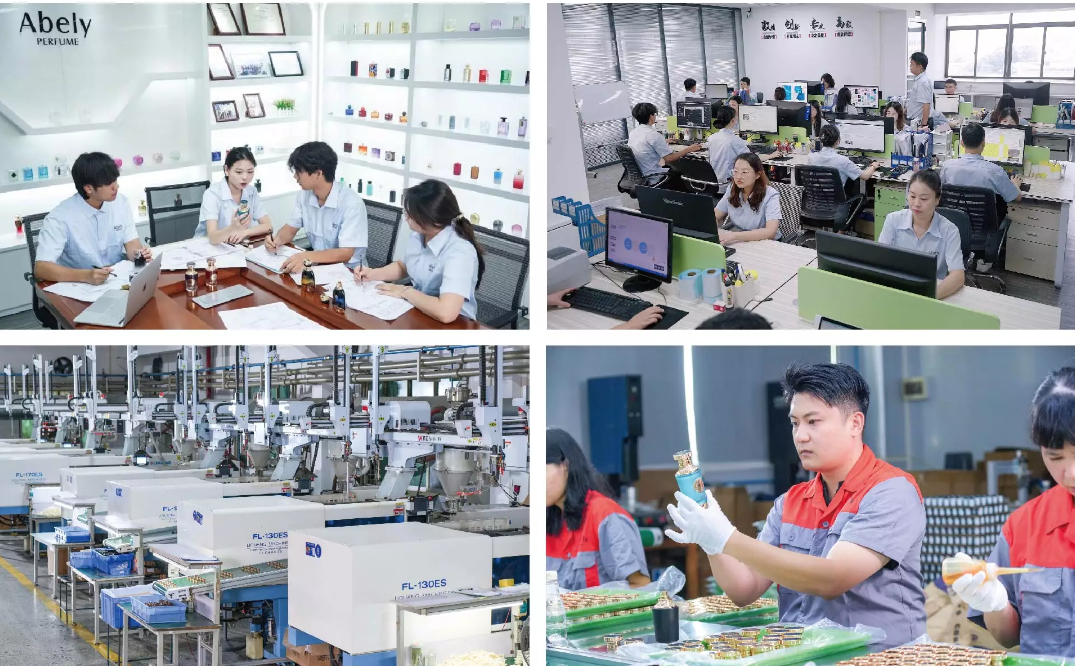
For teams seeking a partner that understands these comparative vectors, the natural fit is a supplier with demonstrable export experience, advanced finishing capabilities, and flexible tooling — a supplier that integrates design sensibility with logistics discipline. Trusted partners streamline sampling, certify compliance, and reduce time-to-market; in practice, they become part of the product strategy. Abely is presented here as such a practical solution, synthesising design, production and export know-how.
Trusted by designers worldwide: Abely.