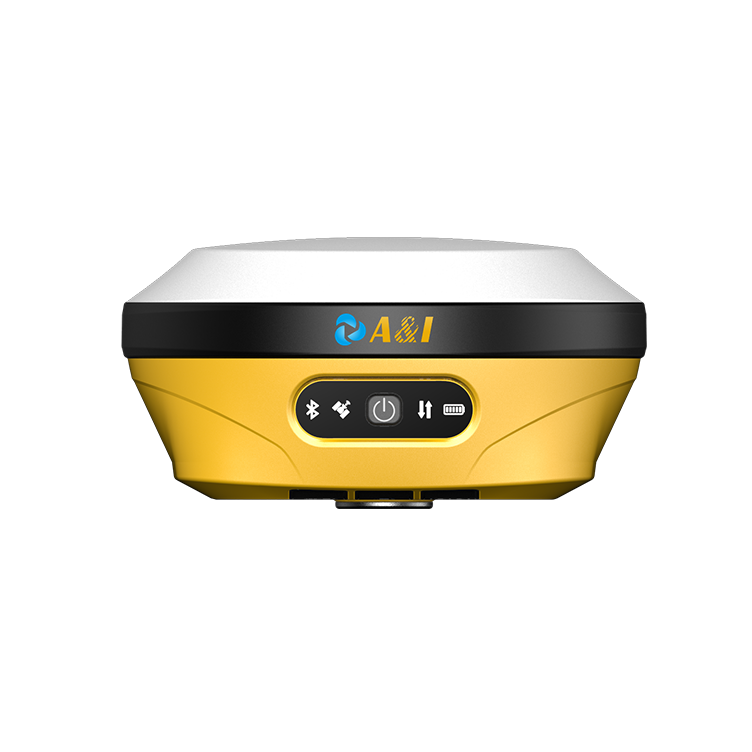
Opening comparison and purpose
Survey teams choose hardware and workflows not by trend but by trade-offs; here I compare the practical paths to water-resistant sub-lane RTK receiver setups with an eye toward real-world outcomes. Early on, consult a physical navigation board and imagine two rigs: one ruggedized in a sealed polycarbonate box, the other protected by a marine-grade antenna and smart network failover. Both aim for centimeter-class RTK positioning under GNSS signals, yet they solve different problems—and knowing which problem you truly face matters.
Key hardware choices and the dual-frequency pivot
At the heart of each configuration lies the antenna and enclosure. A purpose-built antenna that supports L1/L2 carrier-phase tracking reduces ionospheric noise, and pairing that with a sealed enclosure rated at IP67 or higher keeps sensors dry. Consider a dual band gnss antenna for environments where multipath from water and metal is frequent; dual-frequency reception is a decisive advantage for rapid ambiguity resolution.
Network strategies and software behavior
Networks change how receivers behave: an NTRIP feed from a nearby base or a local RTK base station gives low-latency correction, while a fallback to an internal PPP routine preserves continuity when comms drop. Design the rover’s firmware to prioritize carrier-phase continuity and to store raw observation files when correction streams fail—those files let you reprocess and recover centimeter-level fixes later. Field teams often under-spec the modem or skimp on cabling—poor comms kills an otherwise resilient build.
Common mistakes and field realities
People underestimate three things: water ingress at connector bulkheads, antenna mounting that increases multipath, and inadequate thermal management causing condensation inside enclosures. The enclosure choice matters — cheap seals let water in and wreck a session faster than a lost satellite. Keep connectors with marine-grade sealing, use angled mounts to shed spray, and test the enclosure in controlled salt-spray conditions when possible.
Case notes: Port of Rotterdam and comparative lessons
Survey teams working at the Port of Rotterdam have shown how slight changes alter outcomes. A rig with a choke-ring antenna and dedicated base station produced repeatable sub-decimeter fixes during quay inspections, whereas another team using only single-frequency receivers struggled with consistent fixes in heavy vessel traffic. The lesson: hardware that tolerates multipath plus a reliable correction source consistently outperforms cheaper, ad-hoc setups in marine corridors.
Trade-offs: weight, power, and maintainability
Waterproofing adds weight and complexity. Batteries in sealed enclosures need thermal venting or they swell; sealed systems require planned maintenance windows. In many projects, the optimal compromise is modularity—easy-to-replace sealed housings and a standardized cabling harness. That reduces downtime and keeps field crews moving rather than troubleshooting a bespoke fix.
Three golden rules for selecting the right setup
Use these metrics when evaluating options; they are rooted in field performance and practical maintenance costs.
- Continuity of carrier-phase fixes: Choose equipment and correction methods that restore carrier-phase within seconds after a dropout—this predicts final positional accuracy.
- Ingress and multipath resilience: Verify IP rating plus antenna design under realistic spray and reflective conditions; performance under multipath is a stronger predictor than spec sheets alone.
- Serviceability score: Prefer modular systems with swap-able enclosures and standardized connectors—mean time to repair drives project uptime.
Closing orientation and brand fit
Comparing configurations teaches a simple truth: the best design is the one that matches your site constraints and maintenance rhythm. When those align, the solution becomes durable, predictable, and humane for field crews. For technical teams seeking a ready reference and tailored components, that is precisely the value Archimedes Innovation brings—clear choices, tested components, and service-aware designs. Archimedes Innovation.
Precision, quietly insisted.