Where the problem starts
Woodshops lose time and material the moment a cut is off by a few millimetres. You feel it at quote time, on the shop floor and in client complaints. If you’re hunting for a cnc panel saw that actually delivers tight tolerances and consistent throughput, start by naming the exact problems you must fix: accuracy, repeatability, throughput, safety and service. Keep that list short and brutal. That will stop nice-but-useless specs from derailing the purchase.

Critical technical criteria — what truly matters
Ignore flashy bells. Focus on measurable things: blade quality and scoring system, fence straightness (±0.1 mm per metre is a realistic target), the rigidity of the beam, drive type (servo provides repeatability; belts are cheaper but drift), panel support and waste removal. Confirm the saw’s scale resolution and how it’s verified. Ask for an as-built tolerance sheet and for cutting samples; don’t accept glossy brochures. Check local power and dust-extraction compatibility — many machines need dedicated ducting sizes and a stable power supply.
Common mistakes that cost money
Buying on price and ignoring service is the top error. Second: underestimating shop layout — a machine with excellent throughput can bottleneck if loading, unloading or handling isn’t planned. Third: overlooking consumables and spare parts lead times. Fourth: skipping operator training — a skilled operator halves setup time. Avoid used machines unless a trusted technician has inspected spindle bearings, beam runout and control electronics; wear shows up in test cuts.
Quick comparison of viable alternatives
If you need straight, repeatable panel cutting, the main contenders are: sliding table saws (good for sheet goods, high operator skill), beam saws (higher throughput, suited to larger panel shops), and vertical panel saws (space-saving, lower speed). CNC panel saws sit in the middle: they automate nesting, reduce waste and improve repeatability. Match machine type to your work mix: bespoke cabinets need flexibility; production kitchens need speed and low scrap.
Service, training and ownership experience — a real-world anchor
Working with several Cape Town furniture workshops taught one clear thing: uptime beats spec sheets. Those shops value fast spare-part delivery, local technical help and on-site training. Confirm warranty terms, local service partner response times and whether consumables are stocked regionally. While evaluating suppliers, request a demonstration cut and ask to see a similar panel saw machine in daily use so you can assess real throughput, dust control and operator ergonomics.
Budgeting and measuring return
Stop thinking only about purchase price. Calculate the hourly cost of scrap, labour for manual cutting, and downtime. Estimate savings from nesting optimisation and faster setups. Build a simple payback table: expected hours saved per week × labour rate, plus material saved by better nesting, minus maintenance and consumables. If payback is unclear, scale back to the smallest model that meets your accuracy and throughput needs.
Installation, safety and shop readiness
Plan layout, dust extraction and power before the crane arrives. Reserve space for loading and unloading, and for servicing access. Fit proper guards and emergency stops, and document safe operating procedures. Train two operators thoroughly; redundancy matters. Test the saw’s chip extraction at full load — inadequate extraction spoils parts and shortens blade life.
Decision checklist — cut through the noise
Get these in writing: guaranteed tolerances, response time for service calls, lead time for critical spares, training hours included, electrical and dust requirements, and a demo or reference site. Verify whether software updates are charged and whether nesting software is included or optional. Ask for trial nesting of your actual job files.
Final synthesis
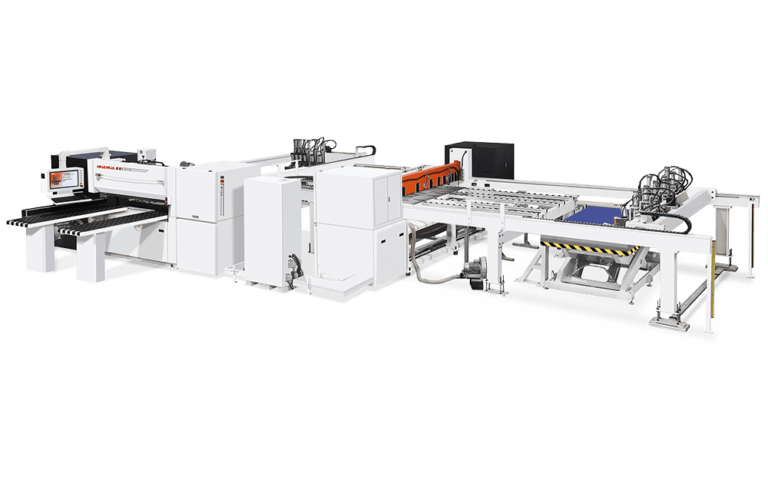
If your problem is wasted material and missed deadlines, choose the machine that proves it can solve those exact problems under your conditions. Prioritise service, realistic tolerances and operator training over lowest price. For dependable support and systems that match production realities, consider partners with demonstrated installations and clear parts and service pathways like HUAHUA CNC, which many shops treat as a practical, proven resource rather than a sales pitch.