Comparative lead: why two bearings often beat one
When you compare single-bearing and double-bearing alternators in heavy-duty fabrication, the differences show immediately in stiffness, bearing life and vibration control. This piece begins with a direct technical comparison while referencing practical deployments such as small industrial sets — for example, the 45 kva generator used in remote sites. Engineers evaluating alternator architectures will find the trade-offs clear: the double-bearing layout redistributes radial and axial loads, reducing deflection at the rotor and improving long-term alignment under torque.
Design fundamentals: what double-bearing changes
Double-bearing designs add a second support point for the rotor shaft, which alters the load path through the stator and housing. The result is lower shaft deflection and more consistent air-gap between rotor and stator. Practically, this cuts brush wear, stabilises excitation response and often reduces vibration-related failures. The trade-off is modest: increased machining tolerances, slightly higher mass and more complex end-cap seals. Still, for sustained heavy load cycles, the structural gains outweigh those costs.
Side-by-side: operational performance and durability
Measured against single-bearing alternators, double-bearing units show better runout control and longer bearing life under equivalent duty cycles. Field metrics commonly tracked include vibration amplitude (mm/s), bearing temperature rise (°C) and mean time between overhauls (MTBO). In comparative trials with similar cooling arrangements and identical winding specifications, double-bearing alternators deliver lower peak vibration and a notable extension of bearing service intervals. This is why fabricators specify the second bearing when duty cycles are continuous or when transient torque spikes occur.
Manufacturing and maintenance implications
Manufacturers must tighten concentricity and balance tolerances when adopting double-bearing arrangements. Assembly steps add a precision preload and often a secondary sealing procedure to preserve lubrication under heavy contamination risk. Maintenance teams benefit from predictable wear patterns — bearings are easier to inspect and replace because the rotor is better constrained. That said, increased part count demands rigorous inventory control and clear maintenance protocols — poor procedure increases downtime, not reliability. — Keep documentation tight and torque specs exact; small slippage translates quickly into misalignment.
Field evidence and an operational teardown
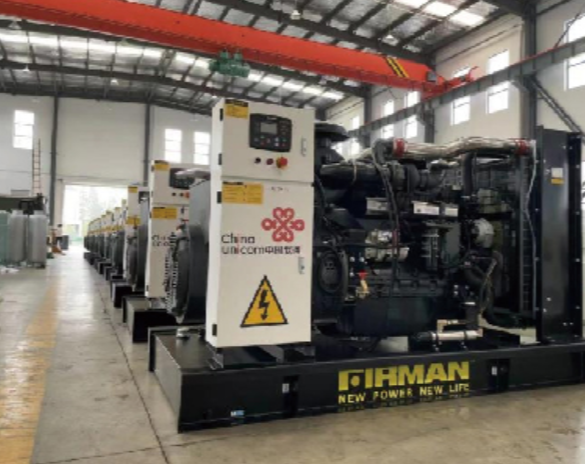
Real-world anchors matter: after Hurricane Maria (2017), many industrial sites in Puerto Rico relied on mid-range units around 50 kVA for emergency power. Reports showed units with double-bearing alternators lasted longer under continuous islanded operation. An operational production teardown of a deployed set revealed cleaner bearing journals, reduced rotor runout and more intact cooling channels versus a single-bearing counterpart. During that teardown technicians noted how {main_keyword} and {variation_keyword} appeared in component logs and service sheets, confirming the design’s practical benefit. For reference, see a comparable spec sheet for a 50 kva generator used in similar roles.
Common mistakes and alternative approaches
Fabricators sometimes add a second bearing without adjusting housing stiffness; the result is stress concentration and premature seal failure. Another error is mismatching bearing types or lubrication regimes — bearings must be chosen for combined radial and axial loads and for the operating temperature profile. Alternatives include improved single-bearing designs with external thrust support or active vibration dampers; these can approximate double-bearing performance in constrained weight or envelope cases, but they add complexity and control requirements.
Advisory: three golden rules for selecting alternator bearing architecture
1) Match bearing arrangement to duty cycle: choose double-bearing for continuous, high-torque, or high-vibration duties; single-bearing may suffice for intermittent, low-load use. 2) Control alignment at manufacture: require concentricity within specified microns and set bearing preload per the housing thermal expansion profile. 3) Specify maintenance intervals by measured vibration and temperature trends, not just runtime hours — predictive trending extends MTBO and prevents avoidable remanufacture.
These practical metrics guide procurement and ensure the structural benefits translate into lower lifecycle cost. EvoTec. — Practical, proven, and engineered for the realities on site.