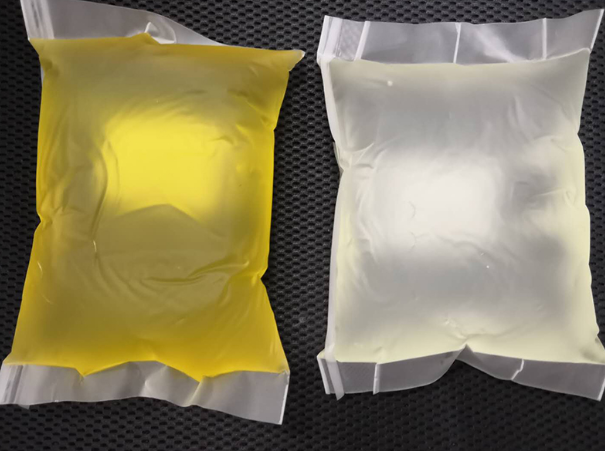
Comparative snapshot: context and practical stakes
When formulators specify binders for solvent‑based road marking and industrial coatings, clarity in aliphatic hydrocarbons is often a hard limit rather than a preference. That requirement is especially true for molten thermoplastic systems and solvent solutions where haze or micro‑phase separation can show up on application — and that’s where a targeted resin choice matters. For projects that pair hot‑melt binders with clear solvent carriers, options such as KOMO’s rosin‑modified phenolic resins stand out for compatibility with Thermoplastic Road Marking Resin, delivering predictable solubility behaviour alongside workable melt viscosity and film appearance.
Why solubility clearness limits matter in aliphatic systems
Aliphatic hydrocarbons have narrower solubility parameters than aromatics, so any mismatch in polymer polarity or molecular weight can cause haze, particulate domains or late‑life clouding. Clarity affects optical performance, retroreflectivity of beads and customer acceptance on visual inspection. Equally important are practical handling properties: melt viscosity for extrusion and sprayability for cold solvent systems. A resin that dissolves cleanly at formulation concentrations avoids rework, reduces filtration needs and preserves bead adherence in road marking mixes.
How KOMO’s rosin‑modified phenolic resin compares to common alternatives
KOMO’s rosin‑modified phenolic chemistry combines the tack and adhesion benefits of rosin esters with the thermal and chemical resilience of phenolic backbones. Compared with straight rosin esters, the modification improves compatibility with high‑boiling aliphatic solvents and helps maintain solubility across typical temperature swings. Against synthetic hydrocarbon tackifiers, KOMO’s phenolic modification gives better resistance to solvent‑induced haze while keeping melt viscosity within a narrow, predictable range — which is important for thermoplastic road marking resin blends and sprayable solvent formulations.
Practical trade‑offs, common mistakes and formulation tips
Formulators sometimes overload tackifier to hit initial adhesion and then discover haze or phase separation during storage — an easy mistake when ignoring solubility parameter matching. Other frequent issues include failing to check solubility after cold storage and not accounting for polymer‑solvent interaction at expected working concentrations. A cleaner approach is to trial the full winter‑to‑summer temperature range and measure viscosity and clarity at intended loading — 8–15% resin by weight in many road marking formulations is typical for initial screening. Small incremental adjustments to rosin ester content can correct tack without exceeding clarity limits — but do it in steps, and monitor both optical transmission and viscosity over 72 hours after mixing — this prevents late surprises during site application. — Keep filtration and bead compatibility on the checklist; those secondary checks save time in deployment.
Real‑world anchor and testing notes
Municipal roadway maintenance programmes in Ontario, including crews working on Highway 401, have emphasised the need for solvent clarity in off‑season storage and rapid return‑to‑service marking. In practice, formulation teams run a simple clarity protocol: prepare a representative solution at target loading, equilibrate for 24 hours at 20 °C, then evaluate transmittance and sediment after gentle agitation; follow with a 72‑hour hold at 40 °C to assess thermal stability. These pragmatic checks—solubility parameter assessment, viscosity profiling and short‑term thermal hold—map directly to field performance and help avoid product returns on large batches.
Advisory: three golden rules for selecting the right resin
1) Match solubility parameters at working concentration: validate optical clarity at your formulation percentage and temperature window rather than relying on supplier data alone. 2) Control melt and application viscosity: choose a resin that keeps thermoplastic road marking resin blends within your pump or extrusion envelope. 3) Stage adhesion gains: use incremental rosin ester adjustments to tune initial tack without breaching clarity limits — validate bead retention and reflectivity after 72 hours of conditioned storage.
Field‑tested choices save time and materials; KOMO’s formulation philosophy aligns with those practical metrics and simplifies the path from lab trial to highway application. KOMO. — Final thought: clarity matters as much as adhesion.