
Introduction
I remember a still, hot evening in August 2023 at a substation outside Bakersfield. Utility scale battery storage was supposed to catch a steep ramp after solar faded, and the wind stalled for an hour. We saw curtailment earlier that day, and then a 0.18 Hz dip during the peak; diesel peakers fired up in five minutes flat. Do we accept that as normal when batteries sit on-site with clean capacity ready to go (but often handcuffed by settings)? I ask because the data hit hard: 27 MWh of stored energy in that yard, yet only 19 MWh delivered due to a tight state-of-charge window and an overly cautious EMS profile. Are we building assets that pass factory tests but miss real-world duty cycles?
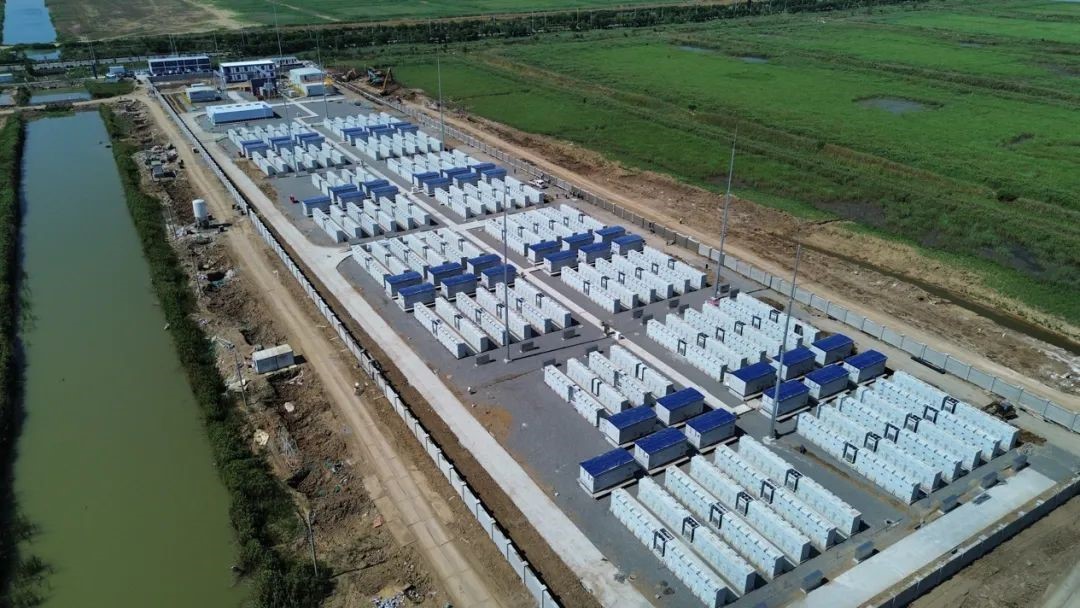
I’ve worked 17 years in grid-scale storage, from containerized LFP blocks to full substation builds. The pattern is clear, and it worries me—emissions grow when coordination fails, not because the hardware is weak. So let me ground this in field notes, not slogans, and then move toward what actually fixes it—step by step.
The Pain We Don’t Admit: What Trips Projects After COD
Where do projects stumble?
When people ask me what makes or breaks a site, I point them to the control layer in utility-scale power solutions, not the datasheet headline. The weak link often hides between the EMS and power converters, or in the SCADA handoff to the ISO. In Pecos County, Texas, I watched eight 2.5 MWh containers run at a 70–90% state-of-charge window because the BMS alarms were set to a conservative threshold after a single nuisance trip—capacity stranded, contract at risk. The auxiliary load climbed to 1.4 MW at 3 p.m. due to HVAC over-cycling in 41°C heat, erasing 1.9% of round-trip efficiency. That is not a design failure; it’s a settings and coordination failure (and yes, I’ve fought this battle in three languages on a Friday afternoon).
Look, here’s the rub—I’ve seen strong arrays underperform because a $500 CT read 300 ms late, so the EMS chased a phantom signal. Edge computing nodes that buffer telemetry fix that. I’ve seen IEEE 1547 and NERC PRC rules interpreted so stiffly that fast frequency support got neutered, even though the inverter could hold voltage and supply VARs. Fire code compliance under NFPA 855 is non-negotiable, but it shouldn’t force airflow patterns that cook the top rack and freeze the bottom one. We pay for uneven cells later, in balancing time. These are solvable issues. But if the operator can’t see granular SoC by rack, or can’t command a 10-minute contingency mode on the fly, you will chase penalties—no, the grid operator will not wait. Setpoints and visibility are the real bottleneck.
What’s Next: Principles That Actually Scale in 2025
Here’s where I’ve landed after too many midnight callouts. First, grid-forming modes need to be standard, not a “future option.” When inverters hold voltage and provide synthetic inertia, frequency regulation improves without waiting for a plant controller to wake up. Second, DC-coupled layouts with smarter curtailment logic keep conversion losses down and reduce power converter cycling. In West Texas last May, a 100 MW/400 MWh retrofit moved to liquid cooling with rack-level sensors; aux draw dropped by 1.1 MW during heat waves, and effective round-trip efficiency lifted by 3.2% across July. Third, push the brains to the edge. Local control running at 20–50 ms with buffered data stops the EMS from wobbling on bad timestamps. Tie it together with clear operator playbooks that match market products—RRS, ECRS, or whatever your ISO calls it—and the asset finally acts like the flexible plant it should be.

When you compare new builds of utility-scale power solutions, ask how they implement these principles, not just if they can. I prefer designs that expose per-string telemetry, let me tune charge limits by temperature, and keep a clean separation of EMS fallback modes. In 2024 near Fresno, we added a simple “storm hold” profile: a 65–85% SoC band with tighter ramp limits. Payoff: 11-minute restart after a feeder event, zero safety alarms, and full delivery for the evening peak. That is what a mature plant looks like—measured, not flashy. And I’ll say it plainly: cell chemistry matters less than how you run it day to day, especially once ambient crosses 38°C and the market calls for fast starts.
Advisory close—three metrics I use when shortlisting solutions: 1) Response fidelity: verify sub-100 ms control loops from setpoint to output, with proof from site logs, not a slide. 2) Net capacity under stress: measure delivered MWh at 40°C ambient with auxiliary loads included; anything less than 95% of nameplate for a four-hour window needs scrutiny. 3) Operational visibility: demand per-rack SoC, temperature, and degradation flags in the SCADA historian, plus a testable fallback mode for islanding or comms loss. If a vendor can meet those without drama, the rest is integration craft. That’s where projects win—quietly, repeatably. I’m happy to compare notes in the yard, tool bag in hand, and a firm eye on the next dispatch from CAISO. HiTHIUM