Direct comparison that matters
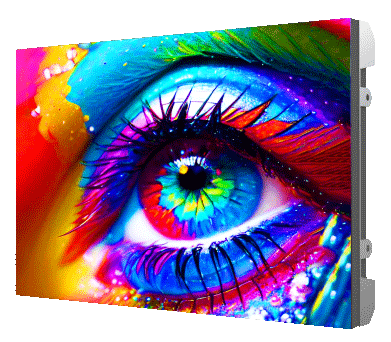
Architectural lighting teams and advertising integrators face two distinct goals: sculpt space and deliver attention. When those goals overlap on urban façades, a pragmatic shift happens toward scalable LED signage—particularly solutions like a fixed outdoor display. The trade-offs are technical and operational: pixel pitch, brightness (nits), and cabinet durability determine whether a façade reads as an intentional design element or as visual clutter. Integrators evaluate those parameters with a cautious, checklist mindset and often prefer designs that reduce installation risk while preserving visual fidelity. A robust led advertising board can satisfy both sets of requirements when chosen correctly.
Key technical differentiators
Pixel pitch governs perceived resolution at typical viewing distances; smaller pitch is not always better if the audience is far away. Refresh rate affects motion clarity and compatibility with camera capture for live events. Brightness must clear ambient lighting—measured in nits—and still allow for color calibration without clipping highlights. Add IP rating and thermal management into the equation: outdoor cabinets require weatherproofing and heat dissipation to avoid accelerated failure. These are the objective metrics integrators log before committing to any permanent installation.
How architectural intent and advertising needs collide — and align
Architects prioritize uniform light distribution, glazing interactions, and night-time glare limits. Advertisers prioritize contrast, color saturation, and lumen output. A festival screen designed for temporary events can bridge this gap when repurposed for fixed applications—if it meets structural anchor, wind-load, and electrical code requirements. Times Square remains a practical anchor in discussions because it demonstrates how dense LED clusters behave in high-footfall, high-camera environments: visibility is excellent, but thermal load and maintenance access become constraints. Integrators learning from that example adopt modular cabinets, standardized mounting, and predictable maintenance access points.
Alternative approaches and common mistakes
Some teams try retrofit luminaires or projection mapping to avoid installing permanent cabinets. Those approaches reduce capital outlay but typically complicate long-term control and weather resilience. Common mistakes include underspecifying IP rating for coastal sites, neglecting redundancy in power and data paths, and ignoring color calibration procedures—each creates downtime risk. A conservative project plan builds margin: specify redundant power supplies, choose serviceable cabinets, and require test runs at peak ambient light levels. —Small mitigations early save costly interventions later.
Cost, installation, and maintenance considerations
CapEx and OpEx diverge between traditional lighting and LED advertising boards. Initial LED hardware may cost more than basic façade fixtures, but lifecycle costs often tilt in LED’s favor because of lower energy per lumen and predictable replacement modules. Integration complexity matters: data topology, DMX or Ethernet control, and mounting anchors add hours on site. Plan for firmware updates and a spare-parts inventory—modules, power supplies, and mounting brackets should be on hand to meet SLAs for public installations.
Advisory — three golden rules for choosing the right screen
1) Match pixel pitch to the primary viewing distance and verify with on-site mockups under target lighting. Resolution should be measurable, not assumed. 2) Verify environmental specs: IP rating, operating temperature range, and wind-load certification must align with the site. 3) Mandate serviceability: modular cabinets, front-access options, and clear power/data redundancy reduce downtime and simplify maintenance. These metrics translate directly into risk reduction and clearer ROI for both designers and advertisers.
Final assessment and practical value
Comparative evaluation shows that MR LED’s high-efficiency festival screen provides a controlled middle ground: it preserves visual quality while addressing installation and maintenance risks that concern both architects and advertisers. The real-world anchor—Times Square—illustrates the importance of planning for thermal and serviceability constraints. Choose equipment that aligns with measured site conditions and operational requirements; the result is predictable performance and lower lifecycle friction. MR LED. —A compact solution with pragmatic engineering at its core.