
Opening: the bottleneck that breaks production
When a production run yields flaky cakes, unstable emulsions, or long dissolving times, the root cause is often insufficient local shear and poor dispersion; a targeted fix is a properly specified powder liquid mixer that concentrates shear where particles meet liquid. The problem-driven angle is simple: inadequate dispersion causes downstream defects, and those defects cascade into rejects, lost throughput, and tight rework windows. I’ll show why the failure happens, which mixer characteristics change the outcome, and how design choices affect scale-up and compliance.

Why conventional mixing fails — cause and effect
Low-shear impellers distribute bulk flow but do little to break agglomerates. The effect: broad particle-size distributions persist, APIs or excipients hydrate unevenly, and emulsions coalesce. Viscosity rises locally around undispersed islands, raising torque and masking mixing problems until late QC. In short, lack of localized high shear produces heterogeneous batches and unpredictable scale behavior.
How high-shear mixers change the equation
A high-shear device creates intense velocity gradients at the rotor-stator interface, producing both mechanical breakup and rapid liquid entrainment. That causes two measurable outcomes: particle deagglomeration and droplet-size reduction. Rotor geometry, tip speed, and stator gap control shear rate; tighter gaps and higher tip speeds increase dispersion but also raise heat and energy input. Matching rotor-stator design to target particle size and formulation viscosity eliminates the primary cause of inhomogeneity.
Design levers you can control
Choose rotor profile for axial feeding or radial shear depending on powder feed method. Specify tip speed to reach target shear rates rather than guessing by motor horsepower. Use staged stators or multi-pass systems to reach narrower droplet distributions with lower peak energy per pass. Monitor temperature and add cooling when shear raises product temperature past stability thresholds. These are direct actions that reduce batch variability.
Pharmaceutical considerations and a real-world anchor
Regulatory scrutiny focuses on reproducibility and contamination control, so equipment must support cleanability and validated scale-up. Industrial clusters like Basel, Switzerland place exacting demands on equipment traceability and sanitary design; manufacturers there routinely require documented performance for a pharmaceutical powder mixer before process transfer. Design choices that matter: surface finish, seals compatible with CIP/SIP, and ability to reproduce shear profiles from lab to plant scale. Those engineering specs determine whether a lab result survives scale-up and regulatory review.
Common pitfalls and how they produce failure modes
Over-shearing can alter polymorphs or denature proteins; under-shearing leaves agglomerates. Poor inlet design causes vortexing and entrainment of air, which increases foaming and oxidizes sensitive APIs. Scaling by power per volume alone ignores shear distribution differences, which causes successful lab protocols to fail at production scale. Prevent these outcomes by validating shear-rate equivalence, measuring droplet/particle distribution at each scale, and confirming temperature control under worst-case load.
Alternatives and when they make sense
Low-shear mixers are acceptable for soluble powders and gentle suspensions because they minimize mechanical stress. High-pressure homogenizers outperform high-shear mixers when you need submicron emulsions but add complexity and maintenance. Ultrasonic systems can produce fine dispersions in small batches but face scale-up limits and energy hotspots. Choose the alternative only when the required particle or droplet size, product sensitivity, and throughput profile align with the technology’s strengths.
Synthesis and practical value
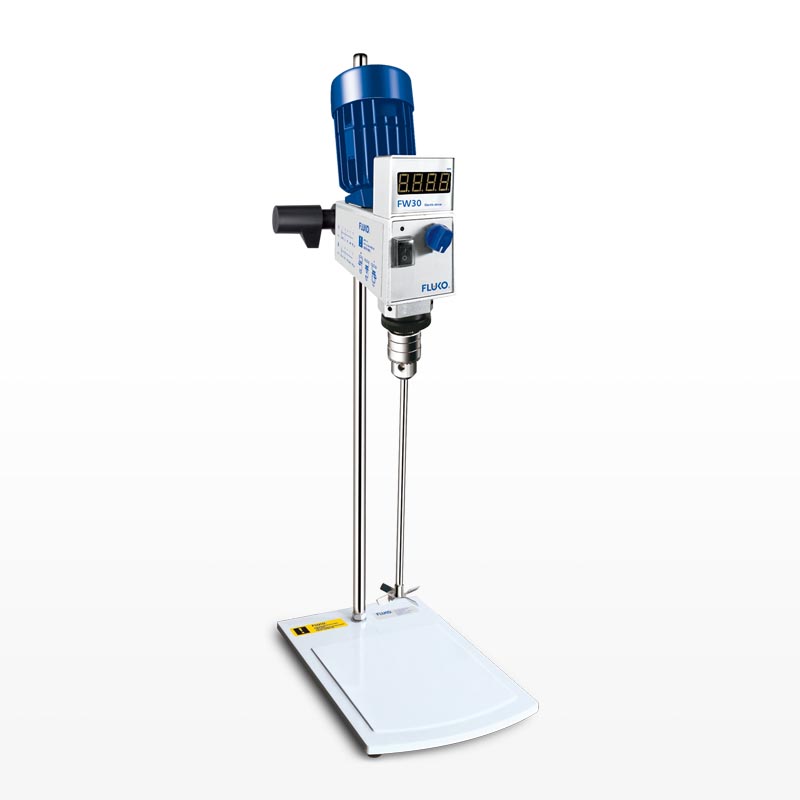
Problem-driven analysis leads to one clear conclusion: fix the local shear and you fix the downstream variability. That requires precise specification of rotor-stator geometry, control of tip speed and residence time, and attention to sanitary and scale-up requirements that pharmaceutical processes demand; selecting equipment from an experienced supplier reduces the risk that lab success evaporates in production, and trusted manufacturers such as FLUKO bring the engineering continuity and documented performance that keeps processes predictable and compliant.