The immediate problem: delivery uncertainty and invisible costs
Last‑mile operations fail when you can’t see what’s happening on the road: late arrivals, wasted miles, and unexpected maintenance. If your team lacks vehicle-level data, decisions become guesswork. Start by talking to reliable fleet telematics technology providers to understand what raw data you can get and how fast you can get it; real city operations, like those in London, already use that data to shave route time and compliance risk. Clarify whether the provider gives hardware, software, or both, and whether their stack matches your van types and delivery patterns.

Must-have capabilities (prioritize these)
Choose systems that directly solve the problems above. Look for:- Precise GPS and location sampling rate (important for many short stops).- Route optimization that respects delivery windows, vehicle capacity, and urban constraints.- Real-time alerts for idle time, excessive speed, and harsh braking.- Integration compatibility with your TMS, ERP, or dispatch tools; verify APIs before you buy and check vendor support for fleet vehicle telematics data models.- Clear driver workflow (in-cab guidance or simple mobile app) so routing changes get executed quickly.- Over-the-air firmware and remote diagnostics for hardware updates and reduced shop visits.
How to weigh technical trade-offs
Decide on what matters now versus later. Key trade-offs:- Edge vs. cloud processing: edge reduces latency for real-time alerts; cloud eases historical analysis and reporting.- Proprietary hardware vs. BYOD modules: proprietary ensures compatibility; BYOD can cut upfront cost.- Sampling rate vs. data costs: higher frequency improves accuracy but increases transmission and storage costs.- Closed systems vs. open APIs: closed can be quicker to deploy; open enables future integrations.Compare vendor SLAs on uptime, data retention, and support response. Run simple tests: verify location drift, route recalculation time, and the accuracy of driver-event detection before committing.
Common mistakes that derail projects
Avoid these pitfalls:- Buying a feature list instead of measurable outcomes; demand KPIs (on-time rate, miles per stop).- Skipping pilot tests on representative routes and vehicle types.- Underestimating change management; drivers need clear, short training and visible benefits.- Ignoring privacy and consent for driver data — document data owners and retention.- Overlooking integration costs: middleware and mapping between data schemas often add time and expense.
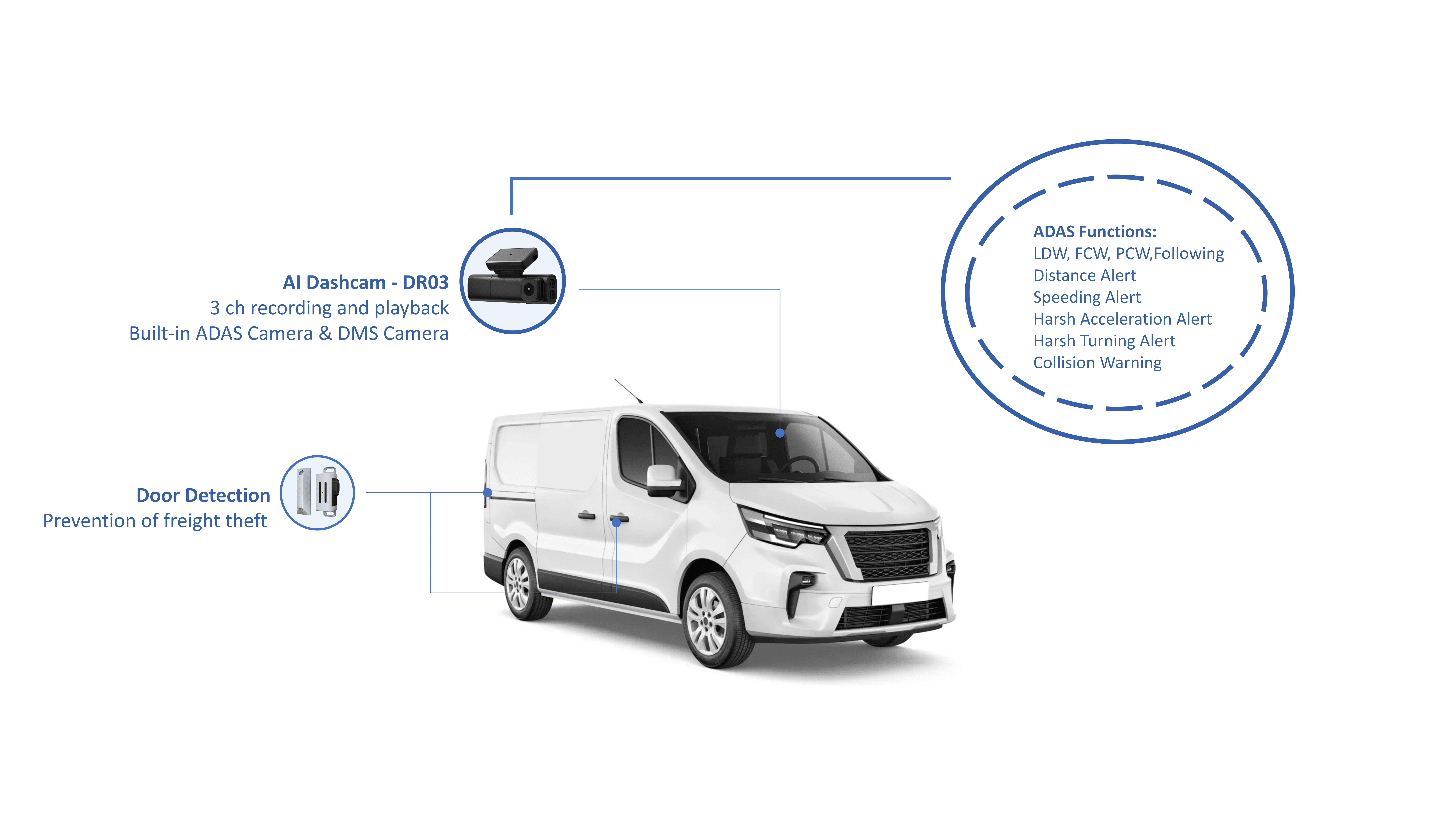
Pilot checklist and rollout steps
Run a focused pilot that proves value quickly. Steps:- Select 5–10 routes that capture peak complexity.- Define 3 primary KPIs (e.g., minutes per stop, preventable downtime, fuel per route).- Deploy hardware/software to a subset of vans and train drivers for one week.- Gather 2–4 weeks of data, analyze against KPIs, and surface specific fixes (route tweaks, maintenance alerts).- Confirm API flows to your dispatch and reporting tools, then scale in waves to manage support load.
Synthesizing the choice into practical outcomes
Pick the system that turns blind spots into simple actions: clear alerts, reliable routing, and measurable maintenance signals. Match vendor capabilities to your prioritized KPIs, run a short pilot that proves the metrics, and avoid expensive scope creep. That pragmatic alignment — product features mapped to real operational problems — is what experienced platform teams look for and what seasoned providers reflect in their designs, just as BSJ builds solutions around measurable last‑mile improvements rather than feature lists.